Druktebeeld | Gemeente Amsterdam
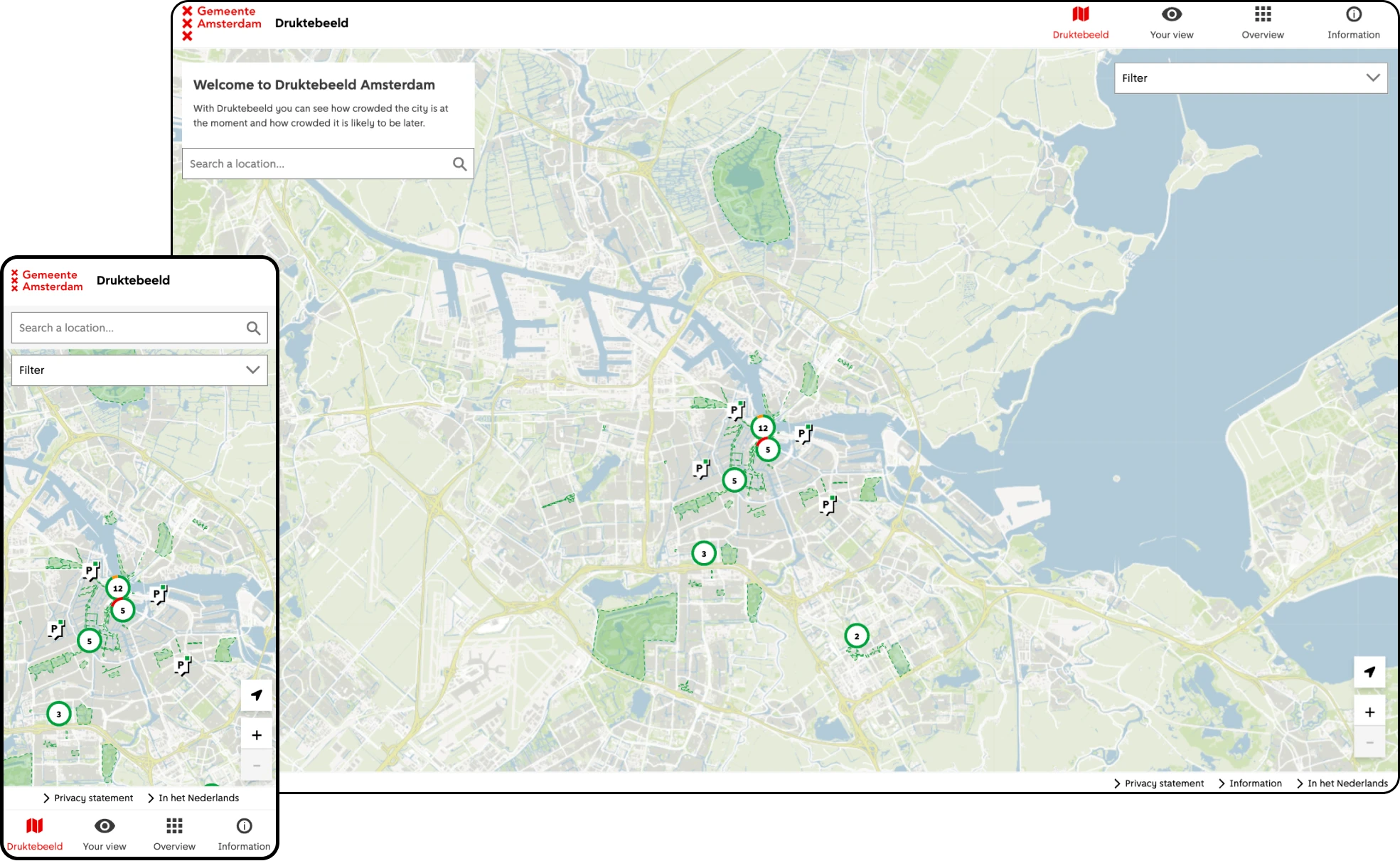
Druktebeeld, a responsive parking-insights application that made complex occupancy data clearer for users and easier for the team to maintain.
Business value
Clearer information
Improved charts and navigation made parking data easier to understand.
Usability across devices
The responsive interface worked better across screen sizes. Preserving the selected view after a refresh and making it directly accessible created a more predictable experience, helping users return to and share relevant information.
More reliable development
Automated tests and CI/CD checks helped detect errors and UX regressions earlier, protecting expected interaction behaviour and making the user experience more predictable.
Maintainability and continuity
Predictable state management and my consistent involvement helped the team maintain and extend the application.
Overview
I extended Druktebeeld, an existing Vue.js application used to present parking-garage data. As the only developer working full-time on the project, I provided continuity across frontend implementation, UX improvements and engineering quality.
The problem
The existing application needed better responsive behaviour, clearer data visualisation, predictable shared state and stronger safeguards for future changes.
My contribution
I improved the responsive interface and navigation, customized Chart.js visualisations and introduced Vuex for shared state. I connected view selections to the application's routing so users could retain their chosen content after a refresh and return to or share a specific view.
This made navigation more predictable and views easier to verify, while supporting discoverability. I also added Jest, Cypress, Husky and CI/CD checks to protect expected behaviour and catch regressions earlier.
Tech stack
- Vue.js
- Vuex
- TypeScript
- Chart.js
- Jest
- Cypress
Frontend architecture & design-system alignment
In a separate React and Redux project at Gemeente Amsterdam, I helped replace a legacy frontend foundation with an architecture structured from scratch and improve alignment between UX and frontend development.
Business value
Ecosystem alignment and handover
The new frontend structure aligned more closely with Gemeente Amsterdam's existing development ecosystem, making the codebase easier for other developers to understand, maintain and take over.
Earlier feedback on errors
TypeScript and Jest helped surface type errors and regressions earlier, supporting debugging and code quality.
Consistent implementation
Design-system alignment and reusable styling supported a consistent interface and reduced repeated implementation work.
Team collaboration
Code reviews and closer UX–frontend alignment supported a clearer development workflow and shared implementation decisions.
My contribution
My work focused on creating a maintainable frontend foundation that aligned with the organization's development ecosystem. This involved structuring the architecture, introducing TypeScript and Jest, and using styled-components for reusable styling.
Code reviews and refactoring improved component reuse and helped the team align implementation with the existing design system. Refining the team's workflow and strengthening collaboration with UX supported a more consistent development process.
Tech stack
- React
- Redux
- TypeScript
- Jest
- styled-components
- Frontend architecture
- Design systems
- Code review